
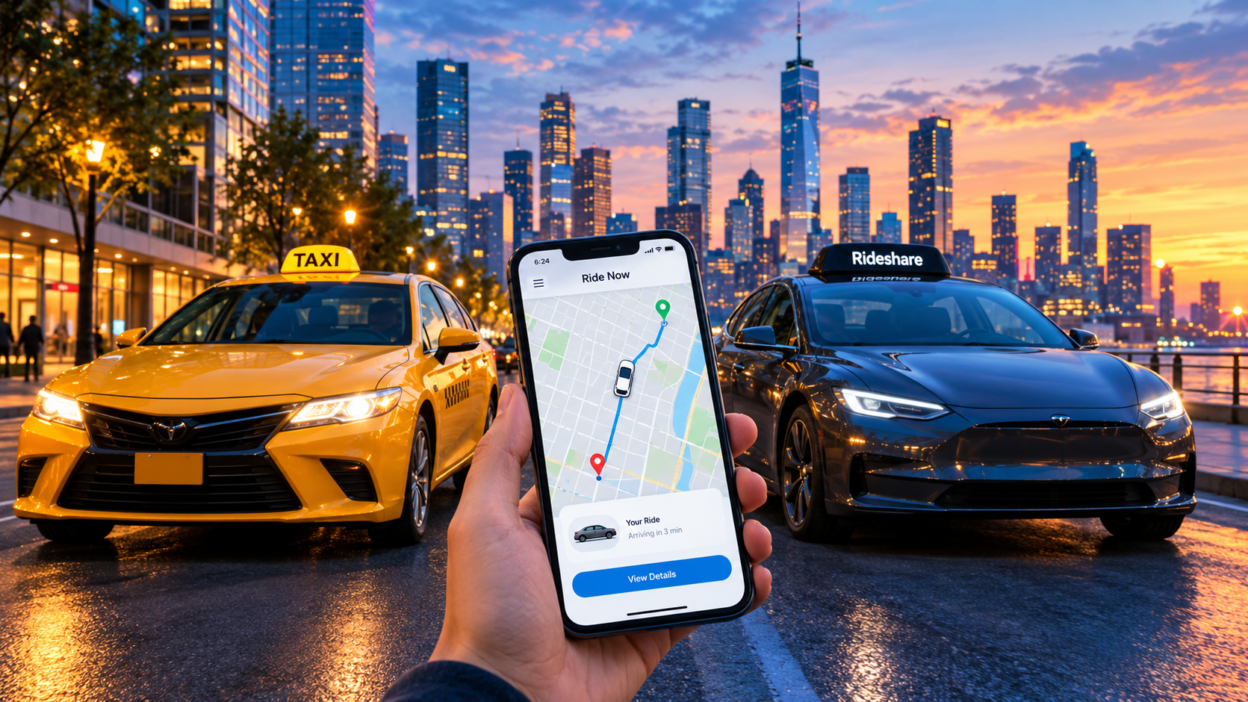
Remember the days of standing on a street corner, arm raised, hoping a cab which would notice you before the next guy?. The most of us, that memory is fading very fast. A few taps on a phone screen is all it takes now. And a car shows up at your door. They are easy to take for granted. But this shift didn’t happen overnight. And it completely re-wrote the rules of getting around a city.
From Street Corners to Smartphones
Taxis used to run on a simple system. You either flagged one down or called a dispatch office and waited. There was no way to know how long you’d be standing there. the no idea what the fare would look like until the meter stopped, and honestly. It not much say in the matter at all. Then ride-hailing apps came along and it will flipped that whole experience upside down.
Suddenly you could see exactly where your driver was. How many minutes away they were, and what you’d be paying before you even got in the car. That kind of transparency was something taxis just weren’t built to offer. It’s a small thing on paper. But it changed how people felt about the entire process of getting a ride.
Why People Made the Switch
It wasn’t just about convenience, though that played a huge part. Pricing became more predictable. Drivers could be rated, which pushed accountability in a way. The old system never really had. And cashless payment meant no more fumbling. For exact change or wondering if your card would even work.
For a lot of people, especially in bigger cities. The ride-hailing apps also just felt safer. You knew who was picking you up. There was a digital trail of the trip. And you could share your location with a friend if you wanted to. Small features like that built trust quickly.
Taxis Haven’t Disappeared, Though
Here’s the thing people often miss. The Taxis are still very much around, and in some cities they’re pushing back hard. Many taxi companies have rolled out their own apps now on app store or play store. The Borrowing the same playbook that made ride-hailing services popular in the first place. Some cities have also tightened regulations to level the playing field between the two.
There are still places where hailing a cab on the street is faster than waiting for an app to match you with a best driver, particularly in dense urban centers during rush hour. So it’s less about one completely replacing. The other and more about both sides adapting to compete.
What’s Coming Next
Electric vehicles are already creeping into both taxi fleets and ride-hailing services. Its driven partly by environmental pressure. And partly by simple cost savings over time. The Card which are Self-driving are the bigger question mark. A handful of cities are already testing autonomous ride-hailing. And and while it’s not mainstream yet, it’s not exactly science fiction either.
This success has also sparked a wave of entrepreneurs launching their own Uber clone apps, hoping to replicate that same convenience in local or niche markets
What seems clear is that the next decade of urban transportation will keep blending the best parts of both worlds. The reliability for people expect from a licensed taxi service, and the convenience that ride-hailing apps introduced. Whichever way it goes, one thing is certain: the way we get from point one to point two has changed for good, and there’s no real going back to the way things were.