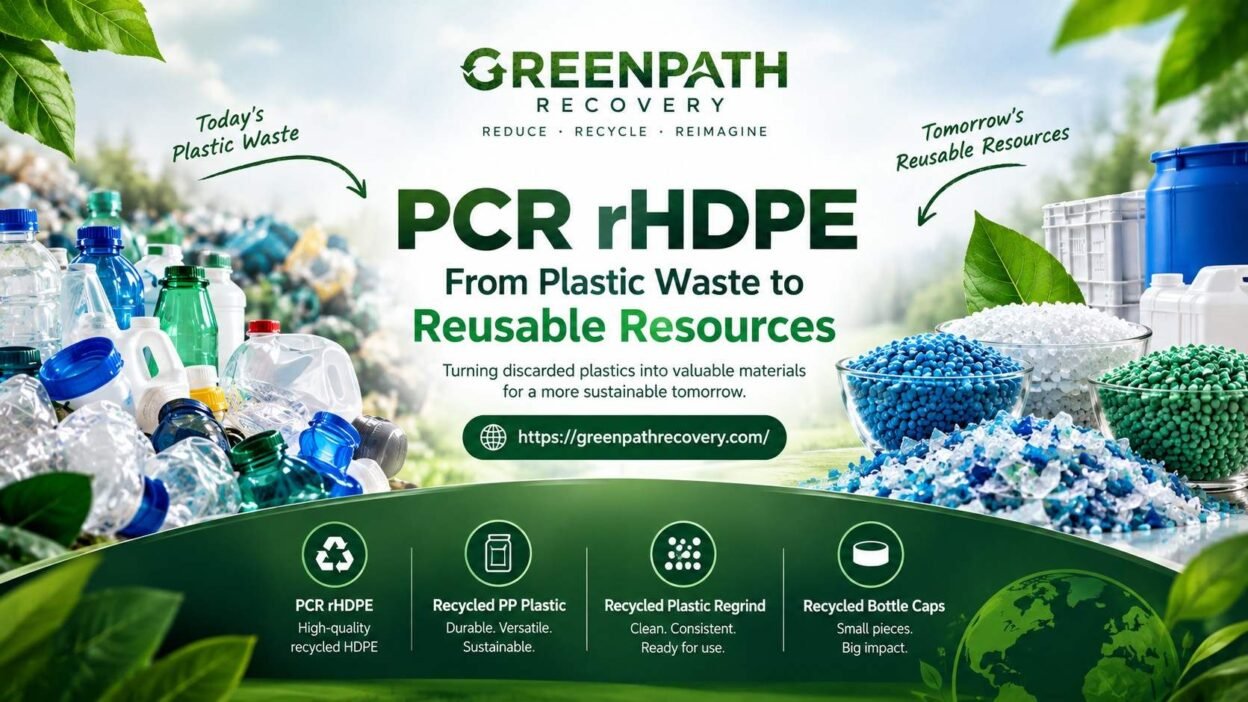
Plastic waste is a growing concern for businesses that rely on packaging, manufacturing, distribution, and other commercial operations. Every year, large quantities of plastic containers, caps, packaging materials, and industrial products reach the end of their useful life. However, many of these materials still contain valuable polymers that can be recovered and used again.
This is where PCR rHDPE becomes important. By converting post-consumer high-density polyethylene into reusable material, recycling programs help businesses move away from a disposal-focused approach and toward more efficient resource management. With appropriate collection, sorting, and processing, discarded plastics can become valuable inputs for new manufacturing applications.
For companies seeking practical sustainability solutions, understanding recycled materials and their applications is an important first step toward building a more responsible supply chain.
What Is PCR rHDPE?
PCR rHDPE stands for post-consumer recycled high-density polyethylene. It is produced from HDPE products that consumers have already used and discarded, which are subsequently collected, sorted, cleaned, and processed for reuse.
HDPE is a durable thermoplastic commonly found in detergent bottles, household containers, milk jugs, certain industrial packaging, and plastic caps. Its strength and versatility make it suitable for many applications, while its recyclability allows suitable material to be recovered.
The recycling process generally involves several stages:
- Collection: Used HDPE products are gathered through commercial, municipal, or other recycling systems.
- Sorting: Materials are separated according to polymer type, color, and quality.
- Cleaning: Dirt, labels, residues, and other contaminants are removed as required.
- Size reduction: Suitable plastics are shredded into smaller pieces or flakes.
- Processing: The recovered material may be converted into regrind, flakes, or recycled resin.
- Quality control: The material is evaluated against the requirements of its intended application.
These steps help transform discarded plastic into a usable resource while reducing the amount of recoverable material sent for disposal.
Why PCR rHDPE Matters for Businesses
Businesses increasingly need practical ways to manage plastic waste while improving material efficiency. Using recycled polymers can support these objectives when the recovered material meets the requirements of the final product.
One advantage of PCR rHDPE is that it provides a potential source of recycled content for manufacturers that use HDPE in their products. Depending on the material’s properties and processing quality, it may be suitable for selected containers, non-food packaging, industrial products, and other applications.
Recycling can also help businesses reduce dependence on virgin plastic. The environmental benefits depend on factors such as collection methods, transportation, processing energy, contamination, and the material being replaced.
For organizations with sustainability targets, incorporating recycled materials can complement waste-reduction initiatives and responsible sourcing strategies. However, businesses should evaluate product specifications and applicable regulations before choosing a recycled resin for a particular use.
Understanding Recycled PP Plastic
While HDPE is widely used in containers and packaging, polypropylene is another important plastic in commercial recycling.
Recycled PP Plastic is produced by recovering and processing polypropylene products. This polymer is commonly used in caps, closures, storage containers, automotive components, reusable packaging, and various household products.
Although polypropylene and HDPE are both widely used plastics, they have different material properties and should generally be sorted separately during recycling. Mixing incompatible polymers can affect the consistency and performance of the resulting material.
The potential applications of Recycled PP Plastic depend on its grade, cleanliness, color, mechanical properties, and processing history. Manufacturers should select material that meets the technical requirements of the intended product.
For businesses managing multiple types of plastic waste, separating polypropylene from HDPE can improve material recovery and help recycling partners direct each polymer toward a suitable processing route.
The Role of Recycled Plastic Regrind
Before plastic becomes a finished recycled product, it often passes through a size-reduction stage. This produces smaller plastic pieces known as regrind.
Recycled Plastic Regrind is shredded or ground plastic that can be used as a material input for certain manufacturing processes. Depending on the polymer and processing requirements, it may be used directly in suitable applications or undergo further cleaning, blending, extrusion, or pelletizing.
Regrind is not the same as finished recycled resin. Its size, cleanliness, consistency, and suitability depend on how the original material was collected and processed.
For commercial facilities, recovering clean, single-polymer waste can improve the usefulness of Recycled Plastic Regrind. Manufacturers should assess contamination levels and processing requirements before incorporating it into production.
An effective recycling program can help businesses separate suitable plastic waste at the source, making downstream processing more efficient.
How Recycled Bottle Caps Support Plastic Recovery
Bottle caps may appear small, but they represent a recoverable plastic stream when collected and processed appropriately.
Recycled Bottle Caps can provide material for recycling operations, depending on their polymer composition, contamination level, and the capabilities of the processing facility. Many caps are made from polypropylene or HDPE, so identifying the correct polymer is important.
A well-managed Recycled Bottle Caps recovery process typically includes collection, sorting, removal of unwanted materials, and size reduction. The recovered plastic may then be processed into regrind or other suitable recycled material forms.
Businesses that generate large volumes of capped containers can improve recovery by establishing clear waste-separation procedures. Keeping caps and containers appropriately sorted, where required by the recycling program, can help preserve material quality.
Although recycling outcomes vary, recovering caps alongside other suitable plastic streams can help capture materials that might otherwise be discarded.
Best Practices for Commercial Plastic Recycling
A successful commercial recycling program begins with understanding the materials a business generates and how those materials can be recovered.
The following practices can help improve results:
1. Conduct a waste assessment. Identify the types, volumes, and sources of plastic waste generated throughout your operations.
2. Separate polymers correctly. Keep HDPE, polypropylene, and other plastics separated according to your recycling partner’s requirements.
3. Reduce contamination. Remove unwanted materials and follow appropriate procedures for managing residues, labels, and other contaminants.
4. Choose the right processing partner. Work with a provider that understands your material streams, processing needs, collection requirements, and quality expectations.
5. Track recycling performance. Monitor recovered quantities, contamination rates, and material destinations to identify opportunities for improvement.
These measures can improve the quality of recovered materials and help businesses make more informed decisions about their waste-management strategies.
Choosing the Right Recycling Partner
Commercial recycling involves more than collecting discarded plastics. Businesses need a partner that can manage material recovery reliably and help identify appropriate downstream uses.
When evaluating a recycling provider, consider its experience with specific polymers, sorting capabilities, quality-control procedures, transportation arrangements, and reporting practices.
A knowledgeable provider can help determine whether HDPE, polypropylene, caps, and other plastic materials are suitable for different recycling pathways. It can also explain the differences between regrind, flakes, and finished recycled resin.
GreenPath Recovery supports commercial recycling initiatives that focus on recovering valuable materials and directing suitable plastics toward productive uses. Businesses can explore its services at GreenPath Recovery to learn more about commercial recycling solutions.
The Future of Plastic Recycling
As manufacturers continue to explore ways to improve resource efficiency, recycled polymers will remain an important part of circular manufacturing strategies.
Materials such as PCR rHDPE, Recycled PP Plastic, and Recycled Plastic Regrind can help keep suitable plastics in productive use when collection, processing, and end-market requirements are aligned.
The long-term success of recycling depends on consistent material quality, effective collection systems, appropriate processing technologies, and reliable demand for recovered resources.
Businesses can contribute by improving waste separation, working with experienced recycling partners, and choosing recycled materials where technically and commercially appropriate.
Conclusion
Turning plastic waste into reusable resources requires a coordinated approach to collection, sorting, processing, and manufacturing. PCR rHDPE offers businesses a way to recover value from post-consumer HDPE products, while Recycled PP Plastic, Recycled Plastic Regrind, and Recycled Bottle Caps represent other opportunities for material recovery.
By understanding the characteristics of each polymer and implementing effective commercial recycling practices, organizations can reduce avoidable waste, improve resource efficiency, and support a more circular supply chain.
For businesses looking to strengthen their recycling strategy, partnering with an experienced provider such as GreenPath Recovery can help establish a practical approach to recovering valuable plastic materials and supporting long-term sustainability goals.