
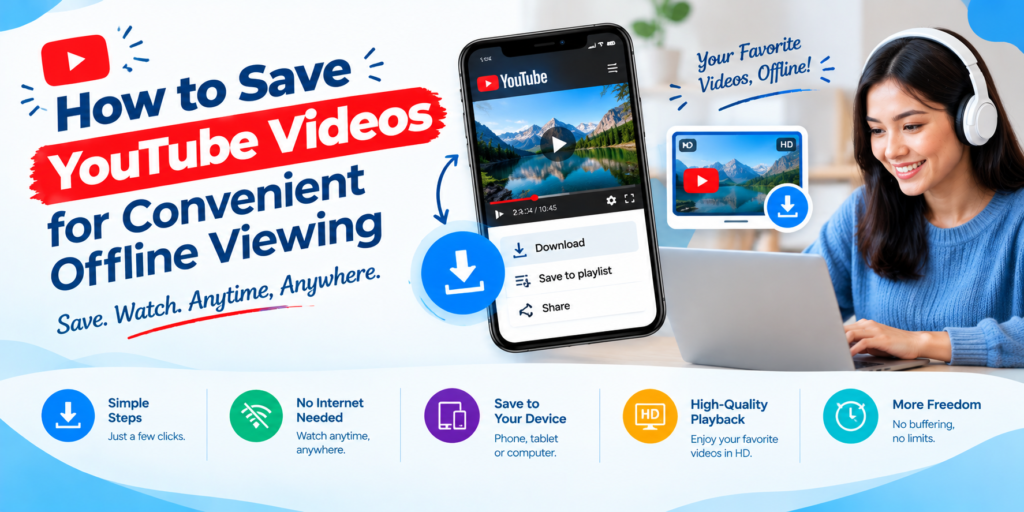
YouTube offers a wide variety of content, including educational tutorials, cooking demonstrations, technology reviews, music videos, and entertainment. Sometimes, viewers want to keep useful videos available for later without relying on a stable internet connection. Choosing an appropriate video-saving method can make it easier to access permitted content when traveling, studying, or working offline.
Simple Ways to Save Online Videos
A straightforward downloading process can save time and make digital content easier to manage. Typically, users copy a video link, open a compatible tool, and paste the URL into its input field. If downloading is supported, the tool may display available format and quality options.
HD Video Saver provides an online platform for processing supported video links. Its website describes a link-based process that allows users to select available media formats and save supported content to their devices. However, online youTube downloads videos may not be available in every region, so users should check the current service limitations before proceeding.
Benefits of Offline Video Access
Offline viewing can be useful when internet access is limited or mobile data is expensive. Students may want to revisit educational material, professionals may need access to presentations they have permission to save, and travelers may prefer having authorized videos available during a journey.
Keeping permitted content on a device can also reduce the need to stream the same material repeatedly. Users can organize saved files into folders based on topics, projects, or personal interests, making useful resources easier to find later.
Understanding Video Quality and Formats
Video resolution affects how clearly images appear on a screen. Lower-resolution files generally require less storage space, while higher-resolution videos may provide more detail on larger displays. The best option depends on the original video’s quality, the device being used, and available storage.
MP4 is a widely supported video format that works with many phones, tablets, and computers. Some tools also provide audio-only options for content that users are authorized to save in that form. Available formats and resolutions depend on the source and the capabilities of the service.
It is important to remember that selecting a higher resolution cannot restore detail that was not present in the original video. Users should choose an option that balances viewing quality, file size, and device compatibility.
Use Video Tools Across Different Devices
People watch online videos on smartphones, tablets, laptops, and desktop computers. A browser-based service can be convenient because it does not necessarily require installing additional software. Users can open the website on a compatible device and follow the available instructions.
After saving an authorized file, it can usually be found in the device’s Downloads folder or another location selected in the browser settings. Checking available storage before downloading large files can help prevent interruptions and keep the device organized.
For mobile users, it is also helpful to review browser permissions and avoid installing unfamiliar applications or extensions from unverified sources.
Organize Videos for Easier Access
A well-organized media library makes it easier to locate useful information. Users can create separate folders for tutorials, work-related resources, personal recordings, and other permitted content. Clear filenames can also make saved files easier to identify without opening each one.
Regularly reviewing stored videos helps remove duplicates and unnecessary files. This can free up device storage and keep important resources accessible. When content is needed for a project or presentation, users should retain only material they are entitled to store and use.
Respect Copyright and Platform Rules
Before saving a YouTube video, users should confirm that downloading is permitted under the platform’s terms and the content owner’s conditions. A multi platform video downloader can help users access supported media links across different social media services, but public availability does not automatically mean a video can be copied, redistributed, or used commercially.
YouTube’s own download features may be available for eligible content and accounts, depending on location and subscription conditions. Users should respect access restrictions and avoid sharing downloaded material without permission when copyright or licensing rules prohibit it.
Conclusion
Offline video access can make learning and everyday information gathering more convenient when used responsibly. Understanding video quality, choosing compatible formats, and organizing saved files can improve the viewing experience. HD Video Saver offers an online interface for supported media links, although availability can vary by platform and region. By using authorized download options and respecting creators’ rights, viewers can manage useful digital content in a practical and responsible way.