When a coworker suddenly takes time off because they are unwell, the team may want to show support but struggle to find the right words. Nobody wants to sound too formal or ask personal questions. Sometimes, even a short message can make a difference by reminding the person that their colleagues are thinking of them.
A thoughtful get-well card is a simple way to express care without expecting anything in return. Whether it comes from one colleague or an entire team, the message should feel genuine, respectful, and appropriate for the situation.
Why Sending a Get-Well Message Matters
Workplace relationships are built through more than meetings and shared projects. Small gestures of kindness can help colleagues feel valued, especially when they are away from their usual routine.
A get-well message lets someone know they have not been forgotten. It can also help maintain a friendly connection between coworkers without making the recipient feel obligated to respond.
The most important thing is to keep the message considerate. Avoid making assumptions about someone’s condition or asking for details they may not want to share. A simple wish for comfort and recovery is often enough.
How to Choose the Right Get-Well Card
Choosing a card depends on your relationship with the recipient and the circumstances. A cheerful message may be suitable for a minor illness, while a gentle and straightforward greeting is often better when the situation is more serious.
When looking for get well soon cards, consider the tone, design, and message. A card for a close teammate might include a little humor if you know they would appreciate it. For a manager, a newer colleague, or someone whose situation you do not know well, a warm and professional message is a safer choice.
You do not need to write a long paragraph. A few sincere sentences can communicate support without overwhelming the recipient.
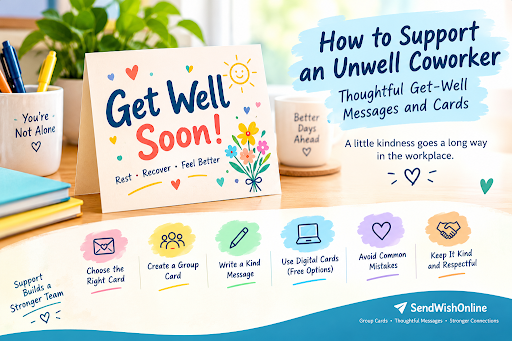
How to Create a Group Get-Well Card Step by Step
A group card lets several coworkers share their wishes in one place. It can be especially helpful when team members work in different offices or follow different schedules.
1. Choose an organizer. Ask one person to coordinate the card and communicate with the team.
2. Invite relevant colleagues. Share the invitation with people who work closely with the recipient. Participation should always be optional.
3. Give contributors a simple prompt. Suggest writing a kind wish, a short note of encouragement, or an offer of practical support.
4. Review the messages. Check that the wording is respectful and does not reveal private information or include inappropriate jokes.
5. Send the card at the right time. Share it when it is likely to be welcome, and avoid creating pressure for the recipient to respond.
Planning ahead makes the process easier and helps the final card feel thoughtful rather than rushed.
What to Write in a Get-Well Card for a Coworker
Many people find it difficult to write get-well messages because they worry about saying the wrong thing. Keeping the wording simple usually works best.
Here are a few examples for different workplace situations:
- For a teammate: “Wishing you a smooth recovery. Take good care of yourself, and we hope to see you when you’re ready.”
- For a close coworker: “We’re thinking of you and sending lots of good wishes. Take the time you need to rest.”
- For a manager: “Sending warm wishes for your recovery. We hope you’re feeling better soon.”
- From the whole team: “Everyone on the team is thinking of you. Wishing you comfort, rest, and brighter days ahead.”
These messages focus on support rather than medical details. If you are unsure what to say, avoid promising that everything will be fine. Instead, express your good wishes and let the person recover at their own pace.
Using Free Digital Cards for Office Teams
Paper cards can be difficult to circulate when colleagues work remotely or across different locations. Digital cards offer a convenient alternative, allowing people to contribute messages without being in the same office.
Teams searching for free get well ecards or free online get well cards can compare available options based on ease of use, sharing features, privacy, and any limits on free access.
SendWishOnline offers a group-card option for bringing individual messages together in one shared card. Teams can explore the Get Well Soon Cards collection when they want to send collective wishes to an unwell coworker.
Before sharing a digital card, make sure the recipient is comfortable receiving workplace messages about their absence. A card should be a kind gesture, not an unwanted reminder of work.
Common Mistakes to Avoid When Sending Get-Well Wishes
Even a well-intentioned message can feel uncomfortable if it crosses personal boundaries. Keep these common mistakes in mind:
- Asking for medical details: Let the recipient decide what they want to share.
- Using inappropriate humor: Jokes about illness may not suit the situation.
- Expecting a quick reply: Make it clear that the person does not need to respond.
- Making promises about recovery: Avoid statements that assume how quickly someone will feel better.
- Sharing private information: Do not mention someone’s condition in a group card unless they have agreed to share it.
A respectful message focuses on the person rather than their illness.
Get-Well Card Etiquette: Keep It Kind and Respectful
Good etiquette begins with considering what the recipient might appreciate. Some people enjoy hearing from their coworkers, while others prefer privacy when they are unwell.
If you are unsure, keep the message short and gentle. Avoid discussing deadlines, unfinished tasks, or when the person will return to work. If practical help is appropriate, offer it without making the recipient feel they must accept.
For group cards, invite contributions without pressuring colleagues. Encourage personal messages, but remind contributors to keep the tone suitable for a workplace setting.
A thoughtful card should help someone feel supported while giving them the space they need.
Final Thoughts
Supporting an unwell coworker does not require perfect words or an elaborate gesture. A short, sincere message can show that colleagues care and are wishing them well.
Whether you choose a paper card or free get well soon cards online, focus on kindness, privacy, and the recipient’s comfort. Group cards can bring a team together, even when people work from different locations.
The best get-well message is not the longest one. It is the one that expresses genuine support without adding pressure.
Frequently Asked Questions
What should you write in a get-well card for a coworker?
Keep it warm and simple. Wish them well, encourage them to take care of themselves, and avoid asking personal medical questions.
Are free get well soon cards suitable for workplace teams?
Yes. They can be a convenient way for colleagues to share supportive messages, provided the card’s tone suits the recipient and the occasion.
How can coworkers sign a group get-well card online?
Choose a digital group-card platform, invite colleagues to contribute short messages, review the card for privacy and tone, and share it at an appropriate time.
What should you avoid writing in a get-well message?
Avoid medical questions, inappropriate jokes, assumptions about recovery, and requests for a quick reply. Keep the message respectful and supportive.