
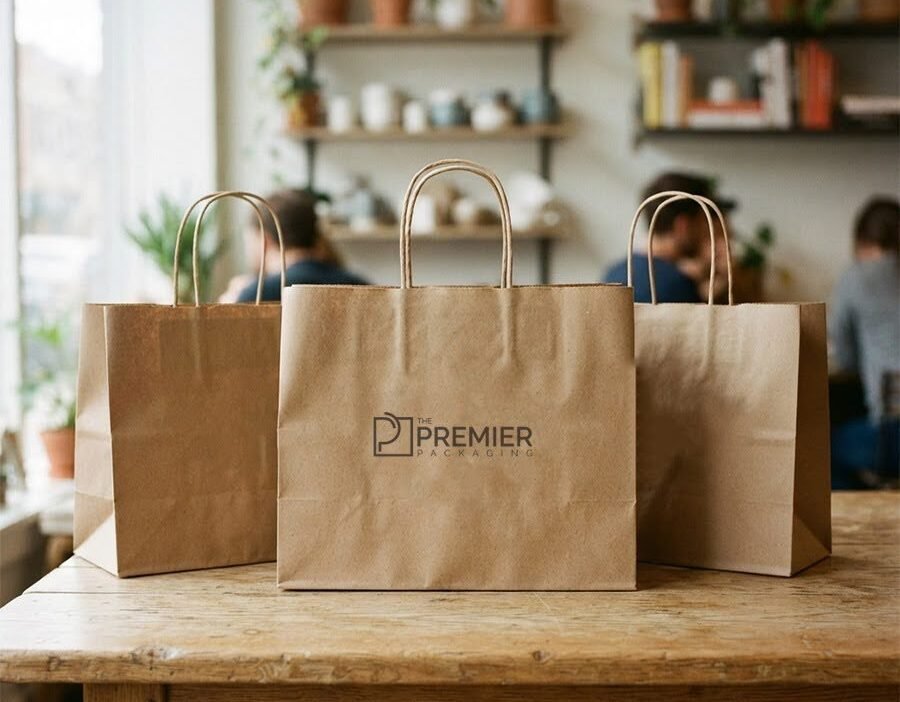
A time when there was one thing a Kraft paper bag did. Were you ever brought one to the grocery store to deliver fruits or vegetables or a loaf of bread to your home, after which it was thrown in the recycling or used to line a trash can? That essentially was the sum and substance of it for much of the past century. In a relatively quiet twist, kraft bags began popping up in locations 10 years ago that most people would not have anticipated, such as boutique clothing racks, gift shops, wine subscription boxes, and even high-end skincare brands. It’s a bag that was just functional that began to look almost stylish, and that’s something that needs to be unpacked a little bit.
Where Kraft Bags Started
The Kraft paper was invented in the late 1800s, and the word Kraft comes from the German meaning “strength”, which is fitting for its durability. The paper is resistant to tearing, inexpensive to manufacture in large quantities, and will support weight. Grocery stores jumped on it early, for a number of obvious reasons:
- Durable enough to carry heavy items without ripping apart
- Cheap enough to hand out for free with every single purchase
- Plain enough that nobody gave the bag itself a second thought
For most of the 1900s, Kraft bags stayed exactly that: functional, disposable, and about as far from anything you’d call “premium packaging.” Nobody was designing them to look good. They existed to hold groceries and survive the walk home, nothing more.
The Shift Toward Retail and Gift Use
Retailers started picking up Kraft bags for a mix of reasons that built up gradually rather than happening all at once. Sustainability was probably the biggest driver. Kraft paper was clearly on track to become the most popular option as shoppers began to understand the problem of packaging waste; it’s recyclable, often compostable, and has a different environmental profile from plastic and glossy laminated packaging. Kraft bags were an obvious and obvious sign of care for sustainability for brands wanting to make that statement.
However, sustainability wasn’t the only reason kraft bags became fashionable; they were also stylish. Much of this was the result of design following the material. In the 2010s, minimalist branding dominated much of retail, in which kraft paper’s earthy texture was a perfect fit. It’s not necessarily cheaper to print a single clean logo on a brown paper bag, but it can look much more deliberate, especially compared to a shiny piece of paper.
Boutique retailers and gift shops caught on fast. A kraft bag with a ribbon handle and a bit of tissue paper sticking out the top started taking the place of the shiny gift bags that used to dominate that aisle. It gave gifts a slightly rustic, handmade feel without anyone actually needing to make anything by hand – the bag did that work on its own.
Why Businesses Keep Choosing Kraft Bags Now
There’s a practical side to this too, separate from how it looks. A few reasons kraft bags keep winning out over other packaging options:
- They come in a wide range of sizes, so retailers aren’t boxed into one shape
- They take printing and stamping well without losing that natural texture
- They hold up whether someone’s carrying home a bottle of wine or a folded sweater
- They’re easier to standardize around than boxes, which need tighter sizing per product
Sizing turns out to matter more than most people assume once you start ordering at scale. A shop selling small items like jewelry or candles can usually stick to compact bag sizes, while a business dealing with larger flat products – prints, posters, certain clothing pieces – often needs something closer to an A3 landscape kraft paper bag so nothing has to get folded or creased to fit. Getting that wrong is a fairly common mistake among smaller retailers who order based on what looks standard rather than what their actual product line needs.
Cost keeps Kraft bags in the running too. Next to rigid boxes or laminated retail bags, kraft paper is still one of the more affordable options, even with custom printing added. For small and mid-sized businesses trying to look put-together without blowing their budget on packaging, that mix of low cost and high perceived value is tough to beat.
Customization Has Come a Long Way
Early Kraft bags were about as plain as packaging gets – brown paper, maybe one stamp, nothing else. That’s changed a fair amount. Printing has gotten good enough that full-color designs, detailed patterns, and even photo-quality images can go straight onto kraft paper without losing the material’s natural texture underneath. Some brands print minimally on purpose, holding onto that stripped-down look because it suits them. Others go in the opposite direction, using bold colors and detailed artwork, treating the kraft surface almost like a blank canvas rather than something to hide.
Handle options have grown too:
- Twisted paper handles – the classic choice, fine for lighter items
- Flat ribbon handles – a bit more polished, common in gift and boutique settings
- Die-cut handles built into the bag itself – cheaper to produce, sturdy enough for daily retail use
A bag carrying a bottle of wine needs a tougher handle than one holding a scarf or a card, and brands have gotten noticeably more thoughtful about matching handle style to how the bag will actually be used, rather than just defaulting to whatever’s cheapest.
Where This Is Headed
Kraft paper bags probably won’t fully replace boxes or glossy retail bags anytime soon, and plenty of products still call for a rigid box over anything else. But the range of situations where Kraft bags show up now has genuinely widened, and there’s no real sign of that slowing down. A bag that started out as a grocery store staple has turned into its own packaging category, one that spans from everyday retail to genuinely upscale gifting.
For businesses trying to figure out where they land on that spectrum, the material itself isn’t really what decides it anymore. What matters is how the bag gets sized, printed, and finished – that’s what determines whether it reads as a quick grocery run or a carefully packaged gift. Kraft paper can pull off either job convincingly. It just comes down to the details a business builds around it.
Final Words
Kraft paper bags went from something nobody looked at twice to a packaging choice brands now plan around on purpose. That’s a bigger shift than it seems on the surface. It says something about how much packaging has come to matter in shaping customers’ judgments of a product before they’ve even touched it. A material that once meant “cheap and disposable” is now deliberately chosen, carefully sized, and printed with real thought behind it. For any business still treating packaging as an afterthought, that’s probably the biggest lesson here – the bag itself has become part of the product experience, no matter that it started out in a grocery aisle.
FAQ
- Are Kraft paper bags actually recyclable?
Yes, most Kraft paper bags are recyclable, and many are compostable as well, depending on the inks and finishes used. If compostability matters to you, steer clear of bags with heavy plastic lamination, since that coating slows down breakdown.
2. Why do Kraft bags cost less than boxes but sometimes look more expensive?
It’s mostly a design trend rather than anything to do with the material’s actual value. Minimalist branding makes plain, textured surfaces feel intentional rather than cheap, so a simple kraft bag with clean printing can read as more premium than a busier, pricier box.
3. What size bag works best for retail gifting?
It really depends on the product. Smaller items like jewelry or candles suit compact bag sizes just fine, while flat or larger items often need something closer to a landscape kraft paper bag, so nothing has to be folded or forced in.
4. Can Kraft bags hold heavier items without tearing?
Yes, as long as the paper weight and handle type match what’s being carried. A twisted paper handle works for lighter goods, but heavier items like bottles usually need reinforced or die-cut handles to prevent tearing.
5. Is custom printing on kraft paper expensive?
Not particularly, especially compared to laminated or rigid packaging. Kraft paper takes printing well without needing extra coating, which keeps costs reasonable even for full-color or detailed designs.