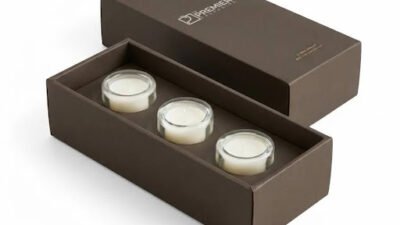
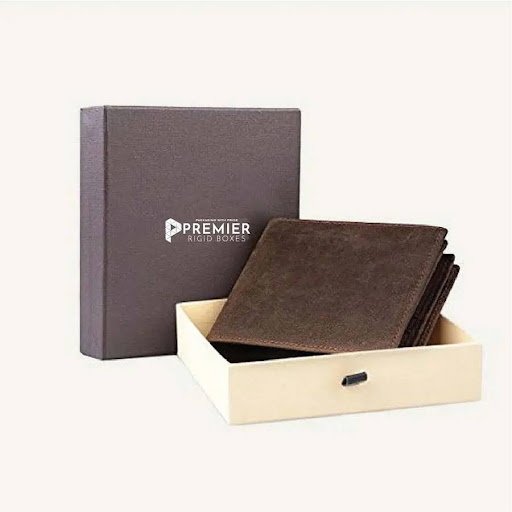
Wallets are an odd product to package well. They’re flat, but not rigid. They’re small, but the leather itself is sensitive to pressure, humidity, and friction in ways a lot of packaging design doesn’t account for. A box that works fine for a phone case or a pair of sunglasses can still fail a wallet, because leather behaves differently under the same conditions. Getting wallet packaging right means designing around the material first and the product’s general shape second — not the other way around, which is where a lot of generic packaging goes wrong.
Why Leather Needs Different Packaging Logic
Most packaging design starts with dimensions, such as the product’s size and the space it requires. Also, leather items present a challenge; the fabric itself is not fixed. Leather is porous, absorbs moisture, and responds differently to pressure depending on whether it’s full-grain, top-grain, or bonded composite leather. A wallet that is tight in the box on day one will develop creases or marks on the leather surface weeks later if the leather is not removed from the box.
And there’s the foldable design too. The unit needs to fit into the wallet box differently depending on the type of wallet, whether a bifold, trifold, or cardholder style wallet, and a cavity cut for one type of wallet will not necessarily fit another, even if it looks the same on paper. It’s most often evident as a flattened edge, not there at the factory, or a permanent crease.
Designing the Interior Around Shape
The exterior of a wallet box is mostly a branding decision. The interior is where the actual protective engineering happens, and it needs to account for a few shape-specific issues:
Fold memory. Leather wallets are usually shipped either fully folded or slightly open, and the insert needs to match the exact state. A cavity that forces a wallet into a different fold than its natural resting position can create a permanent crease over time, especially with softer leathers.
Edge support, not just surface support. Wallet corners and edges are the most vulnerable points — they’re where stitching, folded seams, and card slots concentrate the most stress. A flat foam insert that only supports the wallet’s broad surface, without addressing the edges, tends to let those points flex during transit.
Depth calibrated to thickness, not just length and width. A wallet with card slots loaded (even sample cards for display) sits noticeably thicker than an empty one. Boxes designed around empty-wallet dimensions often end up compressing the product slightly once cards or cash are added, which isn’t obvious until a customer actually uses it.
Non-abrasive contact surfaces throughout. Velvet, felt, and microsuede linings are standard for a reason — leather scuffs and marks more easily against textured or fibrous materials than people expect, and even brief contact during shipping can leave faint surface marks on lighter or unfinished leathers.
Why Rigid Boxes Work Better Than Folding Cartons Here
Folding cartons flex under handling, and that flex translates directly into pressure on whatever’s inside. For many products, that’s a minor issue. For leather, it’s a bigger one, since repeated flexing against a soft-sided box can gradually reshape or crease a wallet over the course of shipping and storage.
Rigid boxes solve this by holding their shape regardless of handling. Combined with a properly fitted interior, a rigid structure keeps the wallet in a fixed position rather than letting it shift or absorb pressure from a flexing exterior. This is part of why personalized wallet rigid packaging has become the standard choice for mid-range and premium leather brands specifically — the format solves a real material problem, not just a presentation one.
Material Finish Considerations
Different leather types and finishes bring slightly different packaging priorities:
- Full-grain and unfinished leathers are most sensitive to environmental effects and need to be lined with materials that allow for breathing rather than plastic or other synthetic materials, which retain moisture.
- Embossed or textured leathers are good with normal handling but will need slightly more space than a smooth-finish wallet would require because the embossed or textured finish tends to flatten under sustained pressure.
- For such product groups, the choice of lining material is critical—exotic or specialty leathers (such as suede, nubuck, and others) tend to mark up easily with any contact.
- Two-tone or contrast-stitched wallets are best suited for inserts that keep the wallet in one position as it moves from place to place, as the lighter-colored panel may fade or be marked if it shifts during transit.
Branding That Doesn’t Compromise Protection
Personalization is a big part of what makes wallet packaging feel premium — foil-stamped initials, debossed logos, magnetic closures, and ribbon pulls are all common additions for gifting and retail presentation. None of that needs to come at the expense of the interior engineering. The mistake to avoid is treating the branded exterior as the primary design focus and the protective insert as an afterthought; the two need to be developed together, since insert depth and cavity shape often dictate how much room is actually available for exterior finishing details in the first place.
The Bottom Line
Wallet packaging looks simple because the product itself is small and flat, but the material behavior makes the design problem more complicated than dimensions alone can solve. Getting the fold structure, edge support, and lining material right is what actually protects the product. The branded exterior is what makes it feel worth the price, but it only works if the structure underneath was designed around the material first.
FAQ
What’s the difference between a wallet box and a generic small-item gift box?
A generic gift box is usually built around dimensions alone, while a proper wallet box accounts for fold type, edge support, and leather-safe lining materials. The two can look similar on the outside but perform very differently in protecting the product.
Does rigid packaging cost significantly more than folding cartons for wallets?
It typically costs more per unit, but for leather goods specifically, the difference is usually justified by reduced shipping damage and a stronger unboxing impression — both of which matter more in a higher-priced product category like leather wallets.
Can the same box work for both bifold and trifold wallets?
Not reliably. The fold structure changes how the wallet sits and where pressure concentrates, so a cavity designed for one fold type often doesn’t properly support the other, even if overall dimensions are close.
Is a foam or fabric-lined insert better for leather wallets?
Fabric-lined inserts (velvet, felt, microsuede) are generally preferred over exposed foam because foam surfaces can become more abrasive to leather over time, especially with repeated handling or during long-term storage.
How does personalized wallet rigid packaging affect production timelines?
Custom tooling for cavity shape and personalized finishing (foil stamping, embossing) typically adds lead time compared to a stock box, so brands ordering personalized rigid packaging should plan for a longer production cycle than they would with an off-the-shelf option.